Banana Pith (Vaazhai Naar) Sarees: The Complete Guide
If you've scrolled through Indian fashion lately, you've probably seen the phrase "banana pith saree" — sometimes called "vaazhai naar saree" in Tamil. These sarees are quietly becoming one of the most talked-about alternatives to cotton and silk, and for good reason.
They're lightweight, breathable, and completely plant-based. They're also part of a weaving tradition that's been kept alive by small communities in Tamil Nadu. Here's a complete guide to what they are, how they're made, and whether one belongs in your wardrobe.
What Is a Banana Pith Saree?
A banana pith saree (or vaazhai naar saree, literally "banana fiber saree" in Tamil) is woven from the fibrous inner stem of the banana tree. After a banana plant fruits, the trunk is typically discarded as agricultural waste. Weavers extract long fibers from the pith, soften them through a multi-step process, and spin them into yarn that can be woven on traditional handlooms.
The result is a fabric that looks like a cross between linen and raw silk — soft, slightly textured, with a natural off-white or cream tone that takes dye beautifully.
The Weaving Process
Making a banana pith saree is labor-intensive:
- Fiber extraction: The banana stem is stripped, and the inner pith is separated from the outer sheath.
- Drying: The fibers are sun-dried for several days to remove moisture and toughness.
- Softening: The fibers are soaked, pounded, and treated with natural softeners to make them spinnable.
- Spinning: The softened fibers are spun into yarn, often by hand on traditional charkhas.
- Weaving: The yarn is woven on handlooms, sometimes blended with cotton or silk for added drape.
- Finishing: The woven fabric is washed, dyed, and finished with a soft border or zari work.
A single saree can take 10 to 15 days to weave, depending on complexity. Each piece is slightly unique because of the natural variation in the fiber.
Why Banana Pith Sarees Matter
Sustainable at the source. Unlike cotton, which requires massive water and pesticide inputs, or silk, which requires silkworm cultivation, banana fiber is a byproduct of existing agriculture. No additional land, water, or farming is needed to produce it.
Vegan and cruelty-free. Traditional silk involves boiling silkworm cocoons, which some buyers avoid for ethical reasons. Banana pith sarees are completely plant-based.
Supports rural artisans. The weaving is concentrated in small clusters in Tamil Nadu, and buying these sarees directly supports weaver families and keeps the craft alive.
Biodegradable. At the end of its life, a banana pith saree decomposes naturally. No synthetic microfibers, no plastic.
How Banana Pith Sarees Feel and Look
The hand-feel is softer than linen but more structured than chiffon. They have a slight natural sheen — not the high gloss of silk, but a warm, muted luster. The drape is medium-weight, which means pleats hold their shape without being stiff.
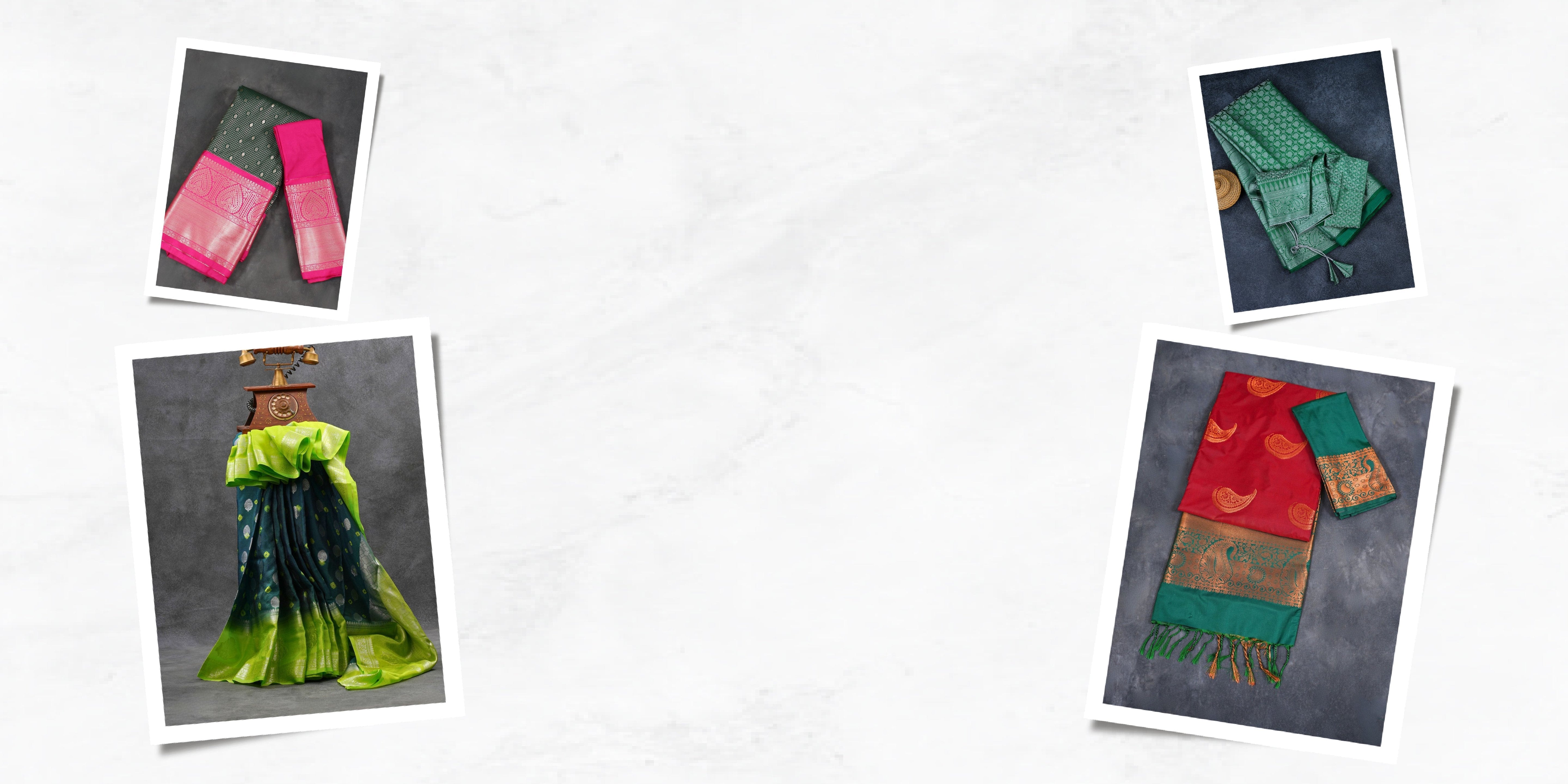
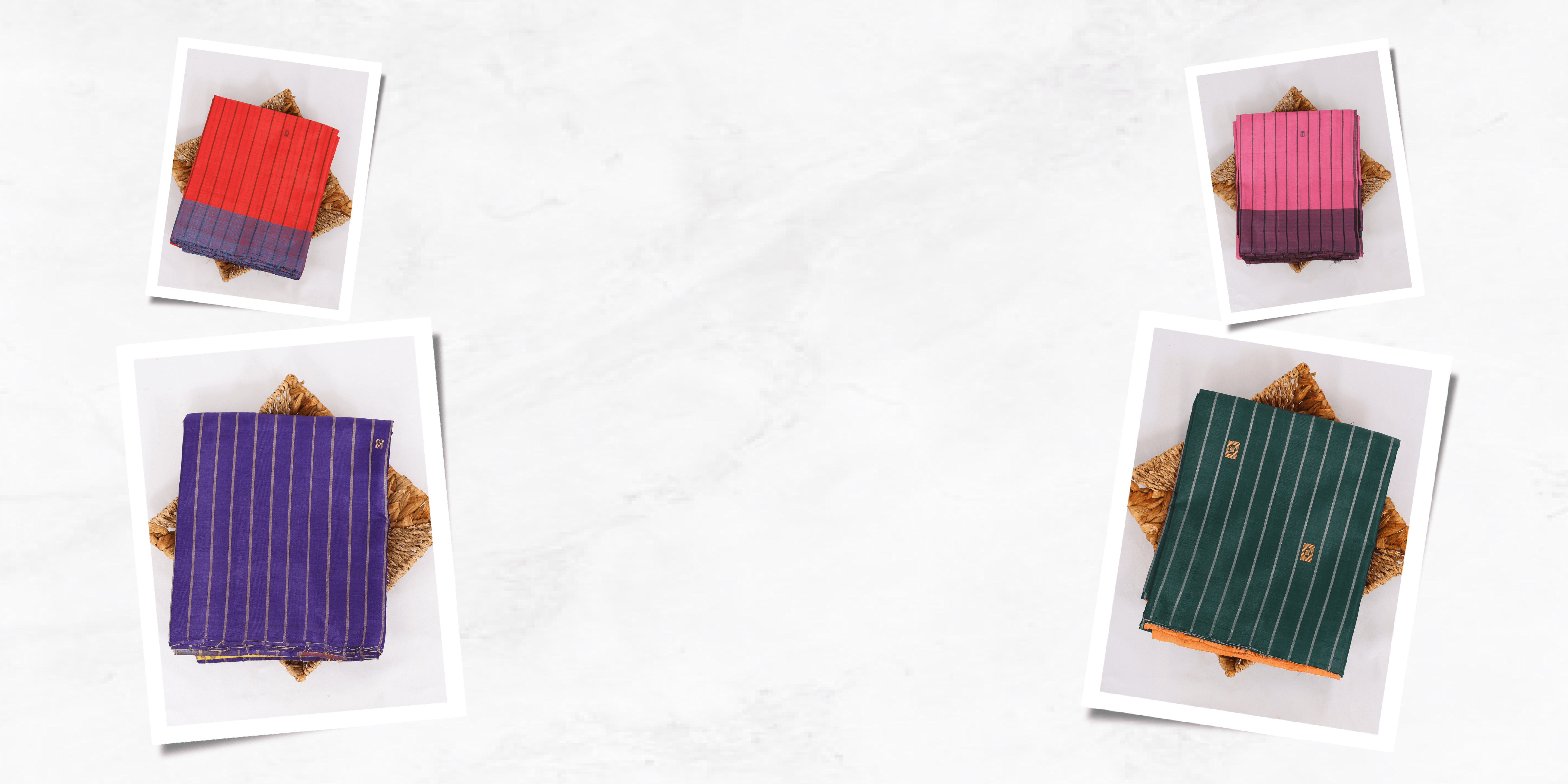
Color-wise, banana pith takes natural dyes beautifully. You'll see them in sage green, mustard, ochre, turmeric yellow, burnt orange, indigo, and deep maroon. Most traditional designs feature small butta (dot) motifs, subtle borders, or delicate zari work in silver or gold thread.
Who Banana Pith Sarees Are For
- Eco-conscious buyers: If sustainability is a purchase driver for you, banana pith sarees are among the most responsible choices available.
- First-time saree wearers: The medium weight and easy drape make them less intimidating than heavy silks.
- Year-round wearers: Banana fiber breathes well, making these sarees wearable in warm weather (unlike heavy silks).
- Gifting: They make thoughtful gifts for relatives who appreciate artisanal pieces with a story behind them.
- Everyday elegance: Too elegant for a casual day, not too heavy for a work event — banana pith sarees occupy a useful middle ground.
Styling a Banana Pith Saree
These sarees pair beautifully with simple blouses in contrast colors. A mustard banana pith saree with a deep teal blouse, or a sage green saree with a terracotta blouse, creates a clean modern look. Avoid heavily embroidered blouses — the saree's understated texture doesn't need to compete.
For jewelry, lean into oxidized silver, brass, or wooden pieces. Gold temple jewelry works too, especially for festive occasions. Skip diamonds — they feel out of place with the natural, earthy aesthetic.
For footwear, leather juttis or kolhapuris work better than heels. The saree has a grounded, handcrafted feel that pairs better with similar footwear.
Caring for Banana Pith Sarees
- Gentle hand wash in cold water with mild soap. Avoid machine wash.
- Line dry in shade. Direct sunlight can fade natural dyes.
- Iron on low heat with a damp cotton cloth between the iron and fabric.
- Store folded in cotton muslin. Avoid plastic bags.
- Refresh with light steam between wears rather than frequent washing.
What to Expect Price-Wise
Because of the hand-weaving and labor-intensive fiber processing, banana pith sarees sit in the mid-range of Indian saree pricing. Basic designs start around $40–60, while intricate zari-work pieces can run $80–120. Premium designer banana pith sarees can reach $150+.
For context: you're paying for roughly two weeks of a weaver's labor, plus the raw material processing. When you compare it to fast-fashion prices, it feels higher, but the cost reflects the reality of artisanal production.
Where to Buy in the USA
Buying authentic banana pith sarees in the USA isn't as simple as buying mass-produced cotton or polyester sarees. Many sellers mislabel polyester blends as "eco" or "sustainable." Look for sellers who can tell you where the saree was woven and can provide photos of the weaving process.
We stock a curated selection of authentic banana pith (vaazhai naar) sarees sourced directly from weaving clusters in Tamil Nadu. Every saree ships from our Milpitas, CA warehouse in 3–5 days, and you can see detailed photos of the fiber texture before buying.
For a broader look at sustainable options, see our full sustainable clothing collection.

Written by JCS Fashions