How to Drape a Saree: 5 Easy Styles Anyone Can Learn
You bought the saree. It's gorgeous. And now it's draped over a chair because you're not sure what to do with six yards of fabric and no one nearby to show you how.
If that sounds familiar, you're far from alone. For many saree-curious shoppers in the USA — whether you're second-generation Indian American, married into the culture, or simply drawn to the elegance — draping is the single biggest barrier between you and actually wearing one. The good news: every style on this list is learnable in under ten minutes with the right fabric and a few safety pins.
Here are five popular draping styles, broken down step by step, so you can stop admiring sarees from a distance and start wearing them.
1. Nivi Style — The Universal Starting Point
Origin: Andhra Pradesh | Best for: Weddings, parties, office wear, literally everything
The Nivi drape is what most people picture when they think "saree." It's the most common style across India and the easiest for beginners.
What you'll need: A lightweight saree (cotton, georgette, or chiffon work best for first-timers), a fitted petticoat tied at the navel, and a well-fitted blouse.
Step by step:
1. Tuck the plain end of the saree into your petticoat at the right hip, starting from the navel and going right.
2. Wrap the fabric around your waist once, moving left to right, and tuck it in all the way around until you return to the front.
3. Make pleats — about 5 to 7, each roughly 5 inches wide — from the fabric hanging in front.
4. Tuck the pleats into the petticoat at your navel, slightly angled to the left.
5. Take the remaining fabric (the pallu), drape it over your left shoulder from behind, and let it fall to about knee length.
6. Pin the pallu at your left shoulder to keep it in place.
Fabric tip: If you're a total beginner, skip silk for your first attempt. A lightweight linen saree or georgette holds pleats well without slipping.

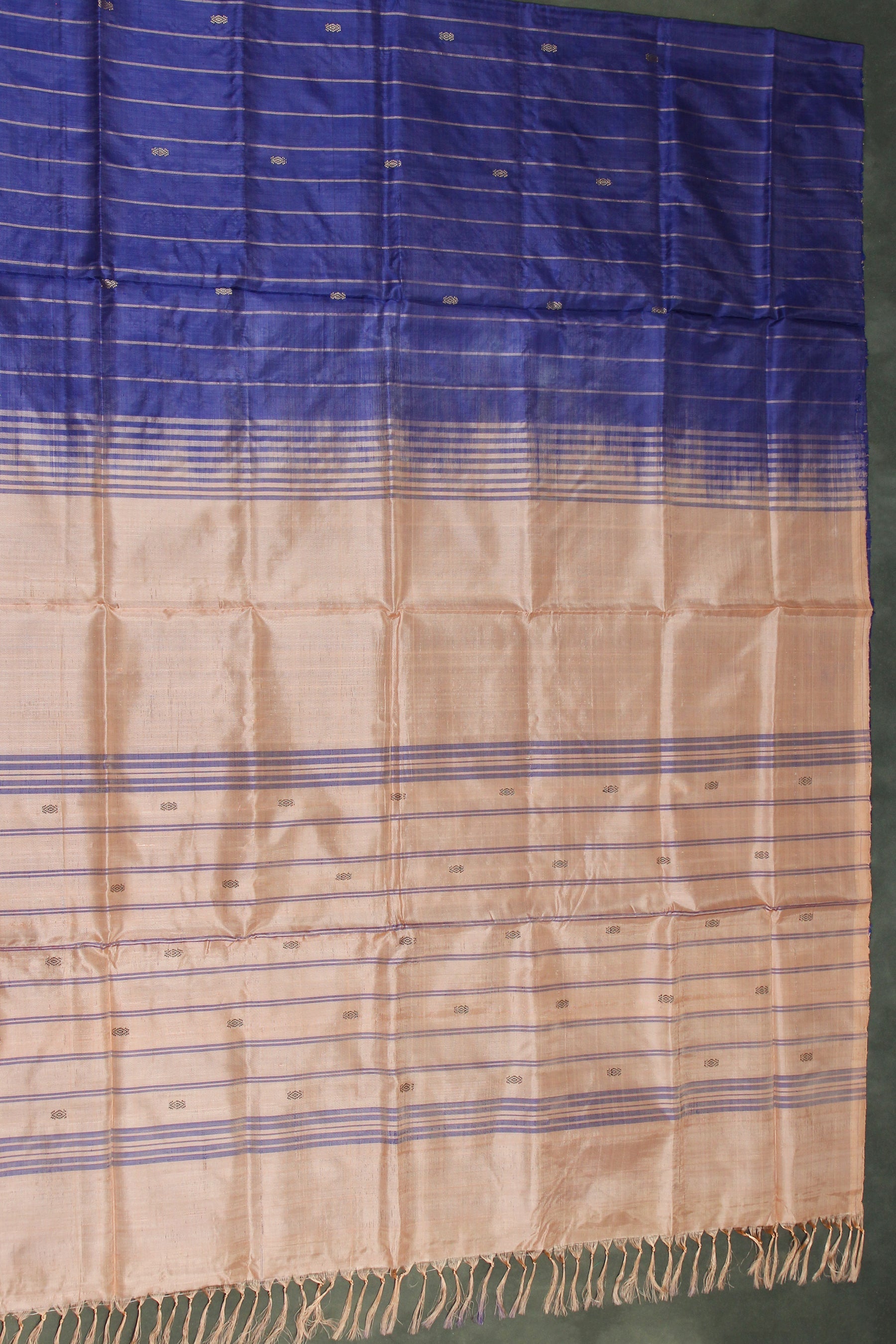
Peach Vaazhai Naar (Banana Pith) Saree with Small Buttas and Blue Pallu
2. Gujarati Seedha Pallu — The Front-Facing Drape
Origin: Gujarat and Rajasthan | Best for: Festive occasions, navratri, garba nights
The seedha pallu ("straight pallu") is almost identical to the Nivi drape with one key difference: the pallu comes over the right shoulder and is displayed across the front of the body rather than draped behind.
Step by step:
1. Follow steps 1–3 of the Nivi drape above.
2. Instead of throwing the pallu over your left shoulder, bring it across your chest from the right hip upward.
3. Drape the pallu over your right shoulder so the decorative border faces outward across your front.
4. Pin it at the right shoulder and arrange the falling end behind you.
Fabric tip: This style is designed to show off the pallu's border work. A Banarasi saree with heavy zari detailing looks stunning in seedha pallu because the embroidery faces forward. Silk works well here since the structure holds the front drape in place.
3. Bengali Style — The Double-Wrap Elegance
Origin: West Bengal | Best for: Pujas, Durga Puja celebrations, cultural events
The Bengali drape skips pleats entirely and creates a flowing, artistic silhouette. It's surprisingly easy once you stop overthinking it.
Step by step:
1. Tuck the saree at the right hip and wrap it around your waist once — no pleats. Let the fabric fall naturally.
2. Bring the remaining fabric (the pallu) across your body from the right side.
3. Drape it loosely over your left shoulder, then bring the end under your right arm and toss it over your left shoulder again, creating a key-hole effect at the front.
4. Fan out the pallu fabric over your left arm.
Fabric tip: Bengali draping works best with sarees that have visible borders on both edges. Soft cotton or silk with a contrasting border is traditional. The no-pleat style means the fabric should have some body — too flimsy and it won't hold the shape.

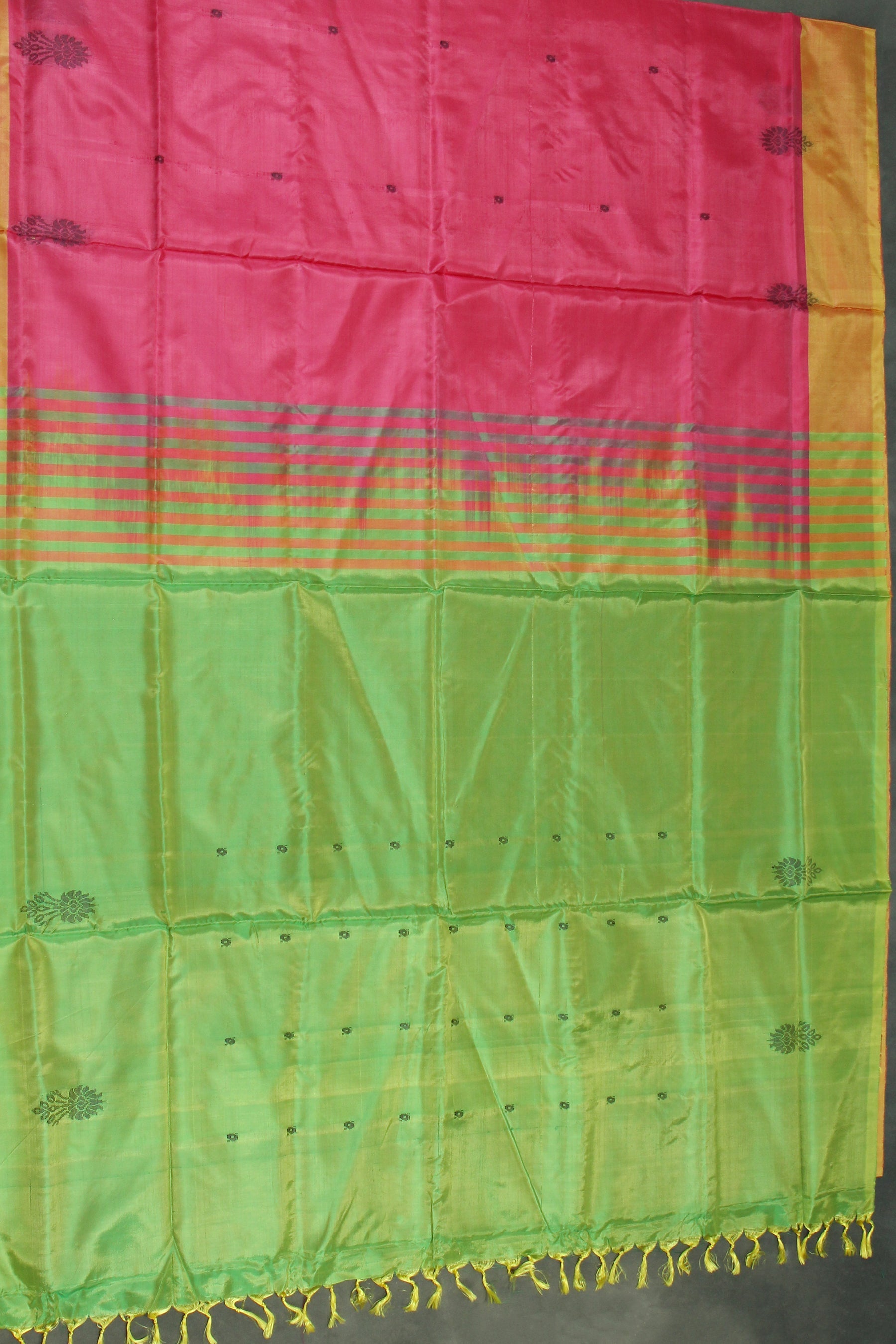
Violet Banana Pith (Vaazhai Naar) Handloom Saree, Borderless Full Body with Small Butta and Contrast Pallu
4. Maharashtrian Nauvari — The Nine-Yard Power Drape
Origin: Maharashtra | Best for: Traditional Maharashtrian weddings, cultural performances, making a statement
The nauvari is a nine-yard saree draped like a dhoti, allowing full range of movement. It's bolder and more complex than the other styles here, but absolutely worth learning.
Step by step:
1. Hold the saree at its center point and position it at the back of your waist.
2. Bring both ends forward. Take the right end and tuck it at the left hip.
3. Take the left end, wrap it between your legs from front to back (like a dhoti), and tuck it firmly at the back waist.
4. Make pleats from the remaining right-side fabric and tuck them at center front.
5. Drape the pallu from behind over the left shoulder.
Fabric tip: Nauvari requires a nine-yard saree, not the standard six. The fabric needs to be sturdy — cotton or raw silk. This isn't a style for delicate chiffons.
5. Pre-Stitched and Ready-to-Wear — Zero Draping Required
Best for: Beginners who want the saree look without the learning curve, time-pressed events, anyone who just prefers ease
Here's the honest truth: not everyone wants to learn to drape, and that's perfectly fine. Pre-stitched sarees come with the pleats sewn in and the pallu pre-set. You step in, wrap, and go.
These have gotten much more sophisticated in the last few years — the stitching is nearly invisible and the look is indistinguishable from a hand-draped saree. Browse the full saree collection at JCS Fashions to explore options that work for either approach.

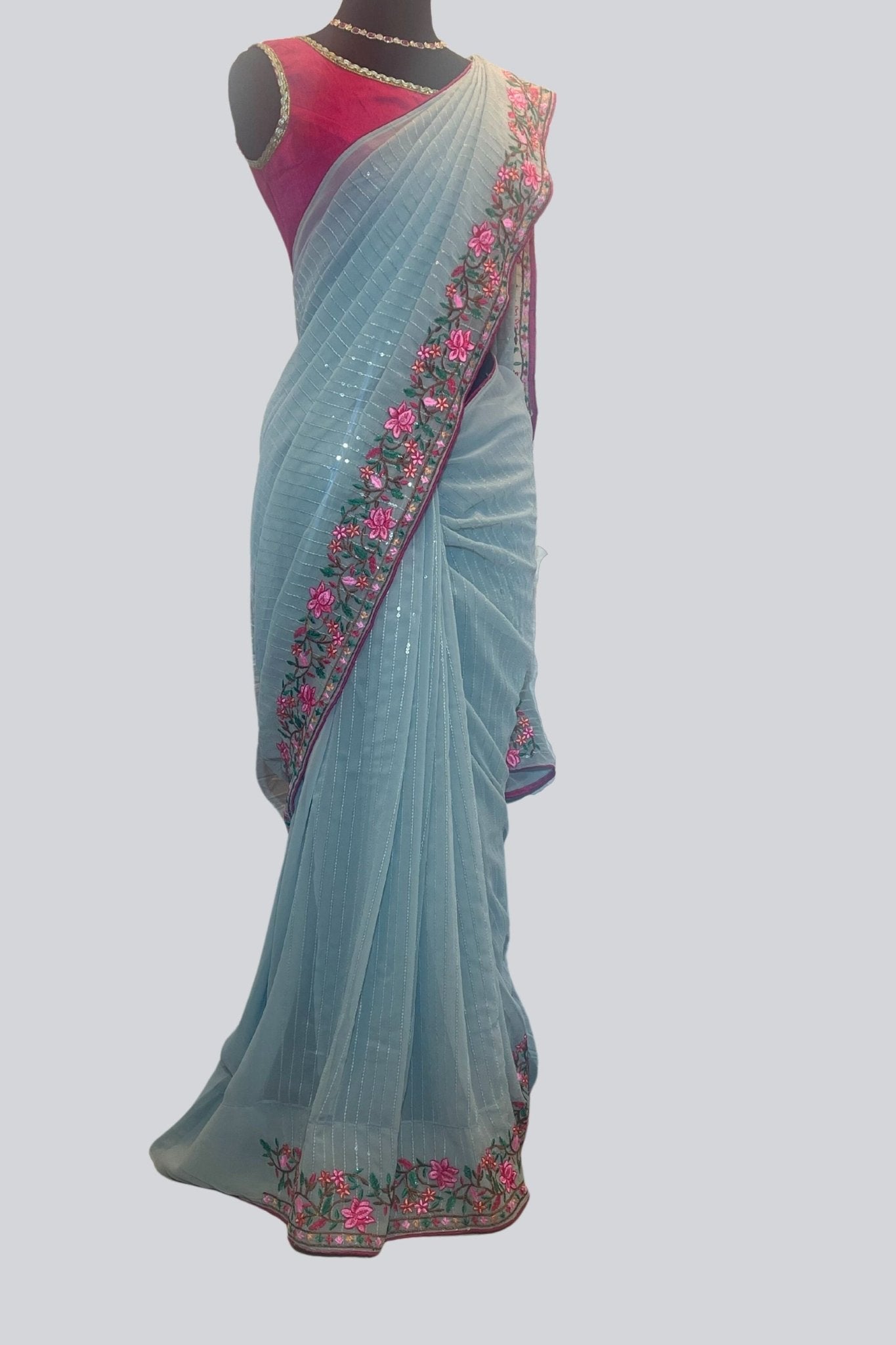
Light Weight Banarasi Silk Saree With Fully Stitched Blouse
Quick-Reference: Which Draping Style for What?
| Draping Style | Difficulty | Best Occasion | Ideal Fabric |
|---|---|---|---|
| Nivi | Easy | Any occasion | Cotton, georgette, chiffon |
| Gujarati Seedha Pallu | Easy | Festivals, garba | Silk, Banarasi |
| Bengali | Medium | Pujas, cultural events | Cotton or silk with borders |
| Maharashtrian Nauvari | Hard | Weddings, performances | 9-yard cotton or raw silk |
| Pre-Stitched | Easiest | Any — especially time-pressed | Any |
Tips That Make Every Drape Easier
Petticoat fit matters more than you think. A loose petticoat is why sarees slip. It should sit snug at your natural waist, tied firmly. If your petticoat keeps sliding down, your saree will too — no amount of pinning fixes a bad foundation.
Safety pins are not cheating. Pin the first tuck at your navel, pin the pallu at the shoulder, and add one where the pallu meets the waist in back. Three pins, total confidence.
Pallu management for windy days or active events: Bring the pallu across your chest and tuck the end into the back of your petticoat at the waist. It stays put and still looks beautiful.
Practice with cotton first. Silk is gorgeous but slippery. Get your technique down with a cotton or linen saree before graduating to silk for events.
Start With the Right Saree
The biggest mistake first-time drapers make is starting with the wrong fabric — usually a heavy silk someone gifted them for a wedding. Start with a forgiving fabric, get comfortable with one style, and build from there.
JCS Fashions ships from the Bay Area, so if you order a practice-friendly georgette or cotton saree today, it arrives in days — not weeks from overseas. That gives you plenty of time to practice before your next event.
If you'd rather skip draping altogether, the ready-to-wear options give you the same look without any of the folding.
Want to feel fabrics in person before committing? JCS Fashions is an appointment-only boutique in Milpitas, CA where you can try sarees on and even get help with your first drape. Book a visit at (408) 444-6792 or email admin@jcsfashions.com — and don't forget to check out what other shoppers say on the reviews page.