Best Temple Sarees for South Indian Women — Silk & Cotton Picks for 2026
The saree you pick for a Friday morning temple visit hits different than what you'd wear to a wedding. One calls for reverence; the other, spectacle. South Indian women in the US tend to treat temple sarees as a distinct category — quieter in embellishment, stricter in fabric choices, always weave-forward rather than print-forward.
If you're shopping for that specific kind of saree in 2026, this guide cuts through the noise. We've pulled the top picks from our current inventory across Kanchipuram silk, soft silk, and semi-silk, with notes on when each makes sense.
Why Fabric Matters More Than Color for Temple Wear
South Indian temple tradition leans toward natural or handloom-woven silk. Cotton works too, especially during summer months, but silk carries the cultural weight at most major temples, particularly during Abishekam days, Karthigai Deepam preparations, or Brahmotsavam events.
The practical breakdown most South Indian women already know:
- Kanchipuram pure silk: the gold standard. Silkmark-certified pieces confirm authenticity. Wear this when the temple visit has ceremony attached to it.
- Soft silk or semi-silk: practical for weekly visits or fasting days when you're running errands afterward. Lighter, faster to drape.
- Cotton or tissue silk: best for summer mornings or California heat. Still reads traditional at most temples.

Browse the full range in our Pure Silk Sarees collection: Kanchipuram, Uppada, and Kanjivaram handlooms, Silkmark-certified where applicable.
Three Kanchipuram Picks Worth Buying Now
Kanchipuram sarees are the most-copied, least-substitutable saree in South Indian fashion. The weight, the zari finish, and the double-warp weave structure are things no polyester "Kanchipuram-style" saree can replicate, which is why women who know the difference keep coming back to the real thing.
Three options from the current inventory stand out:
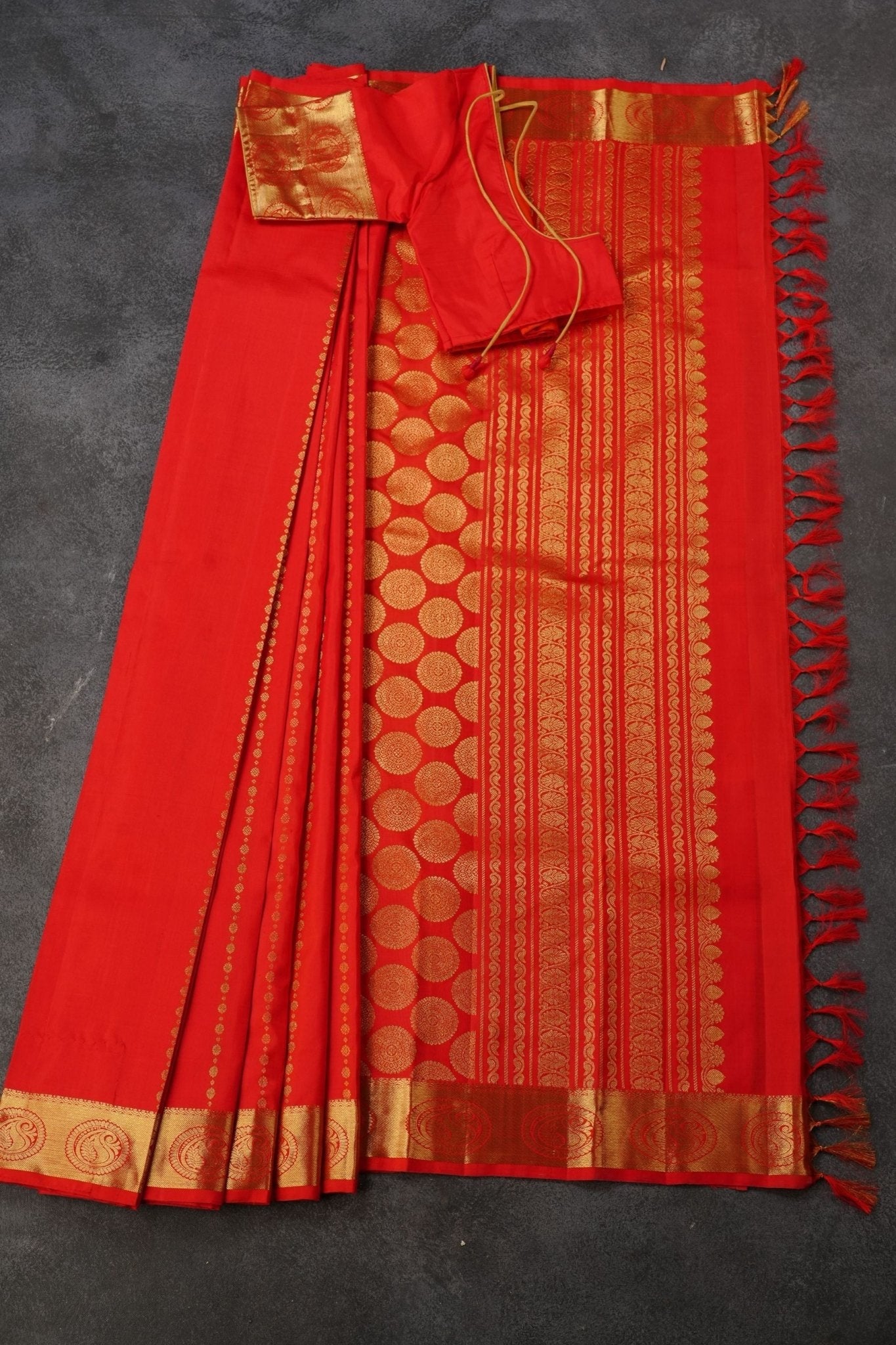
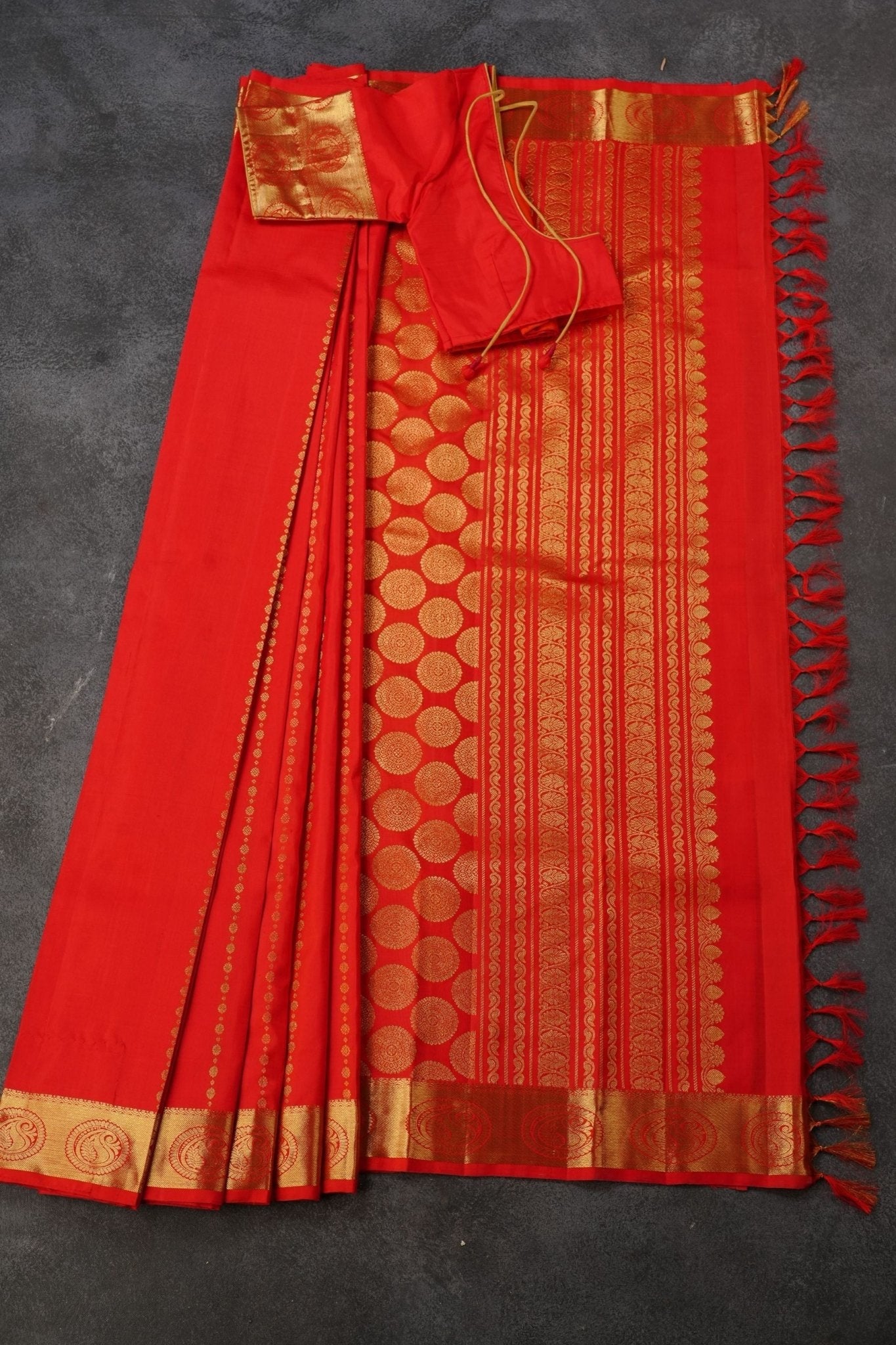
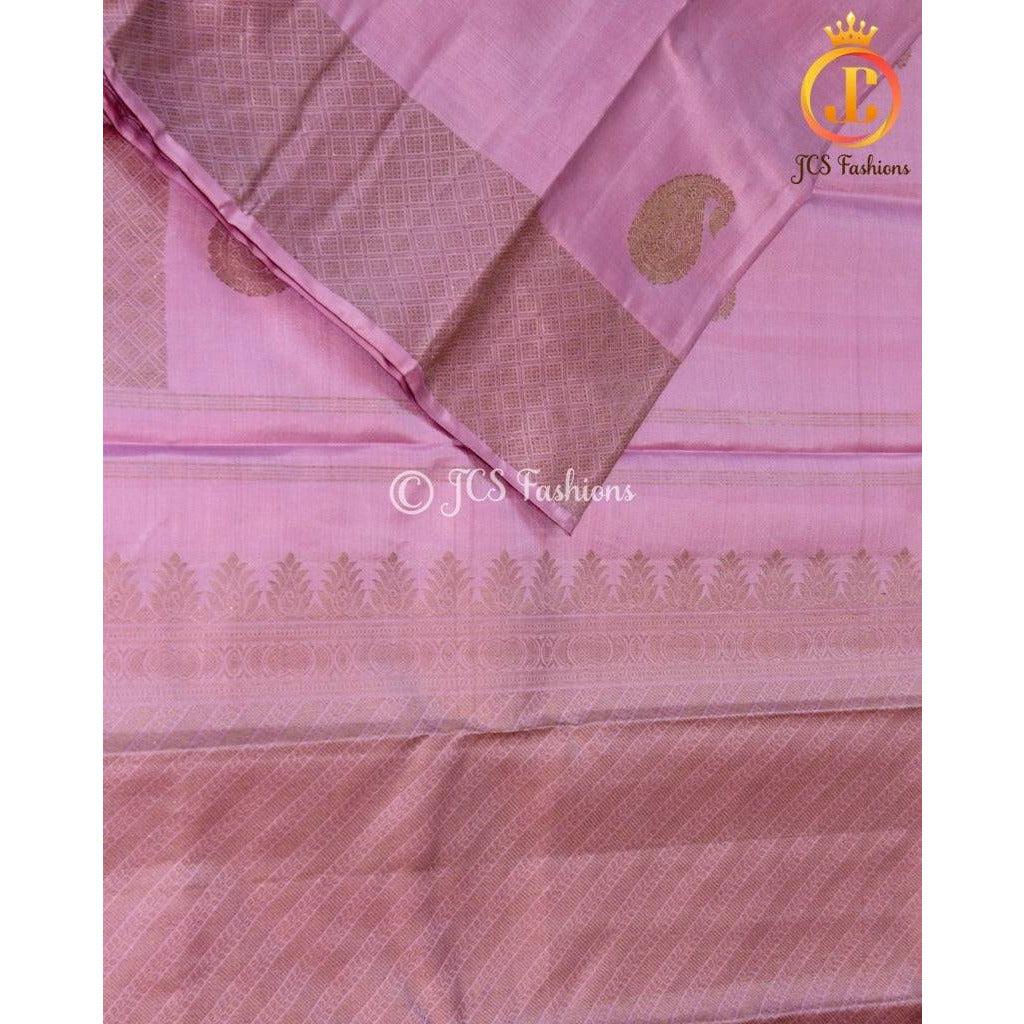
Pure Kanchipuram Silk Saree in Pink, 2g Gold Zari: $275
Bridal-grade, but it handles major festival temple visits just as well. The 2g gold zari won't tarnish after a few wears, and the pink body with heavy pallu catches light in puja hall settings without reading as overdressed. Comes with a fully stitched blouse included.
Orange Kanchipuram Saree, Gold and Copper Zari Butties: $200
Copper zari against orange is a classically South Indian combination that holds up decade over decade. Gold butties across the body add texture without competing with the pallu for attention. A strong, repeat-use pick for anyone wearing this category of saree more than twice a month.
Green Kanchipuram Handloom Silk Saree: $200
Green is an auspicious choice in Tamil Nadu and Telugu tradition. This handloom version is noticeably less stiff than machine-woven alternatives, which matters when you're sitting cross-legged through a long puja. Fully stitched blouse included.
All three ship from California, typically arriving in 3–5 business days. See the full Sarees in USA collection for more options across every price point.

Soft Silk and Semi-Silk: The Practical Weekly Temple Saree
Not every temple visit is a major festival. For regular Tuesdays and Fridays, or monthly Amavasai days, most women don't pull out the $200 Kanchipuram. A soft silk or semi-silk in the $75–$150 range is the practical call.
What to prioritize in this tier:
- Zari woven into the border, not printed on. It lasts significantly longer and holds its sheen after washing.
- A contrast-color blouse. This is traditional in South Indian draping and also makes the whole look more put-together.
- 5.5 meter length. Most temple-style drapes need the full length for a proper nivi or madisar.
The Kanjivaram Soft Silk Saree with Butta Concept in Cream ($150) is a reliable option here. Cream works well at temples where white or off-white is preferred, and the small butta motif throughout is understated enough for regular visits without looking bare.
For a more budget-friendly pick that still reads traditional, the Kanchipuram Handloom Silk Saree with Red and Purple Border ($75) is hard to fault. The red-purple border combination is South Indian temple-wear shorthand for a reason: it photographs well and pairs cleanly with gold jewelry.
Shop by price range:
- Sarees under $81 for dependable weekly picks
- Sarees for $100–$150 for mid-range silk options
- Sarees above $200 for heirloom-quality Kanchipuram

The Blouse Factor
South Indian temple draping, especially madisar, requires a blouse that fits well enough to keep tucks in place through two or three hours of standing and sitting. A poorly fitted blouse undermines both the drape and the comfort.
If you're buying a new saree and don't have a local tailor, a saree with a ready-to-wear blouse is the faster path. Most of the Kanchipuram picks above include fully stitched blouses. Check the product page for your size before ordering.
If you have a local tailor, buying unstitched blouse fabric gives you more control over the neckline and sleeve length. Several sarees in our Semi Silk collection include unstitched blouse material if that route works better for you.
The Honest Buy
For South Indian women visiting a temple regularly in the Bay Area, you realistically need two sarees in this category: one good Kanchipuram ($200+) for major festivals, and one dependable soft silk ($75–$150) for regular visits.
If you're buying just one right now, start with the Green Kanchipuram Handloom at $200. It covers both festival and regular use, holds its value when stored properly, and the blouse comes already stitched. That's the one we'd buy first.

Written by JCS Fashions