Best Kanjivaram Sarees for Tamil Weddings — NRI Shopping Guide
Tamil weddings have a saree hierarchy, and everyone at the venue knows it. The bride's side arrives in the heaviest silk they own. The mami crowd shows up in sarees they've held onto for decades. Flying in from the US, the outfit you choose carries a message about how you see the occasion.
A Kanjivaram saree is the safe answer. More than that, it's the right one.
But "Kanjivaram" covers significant ground. A $150 piece with a nice zari border is technically a Kanjivaram. So is a $500 saree where the body weaving took four days. Here's how to choose the one that fits a Tamil wedding, broken down by what matters most for NRI guests and family members buying from the US.
Weight and Zari Coverage: The First Filter
Zari coverage is how guests signal their relationship to the occasion. At a Tamil wedding, it matters more than any label inside the saree.
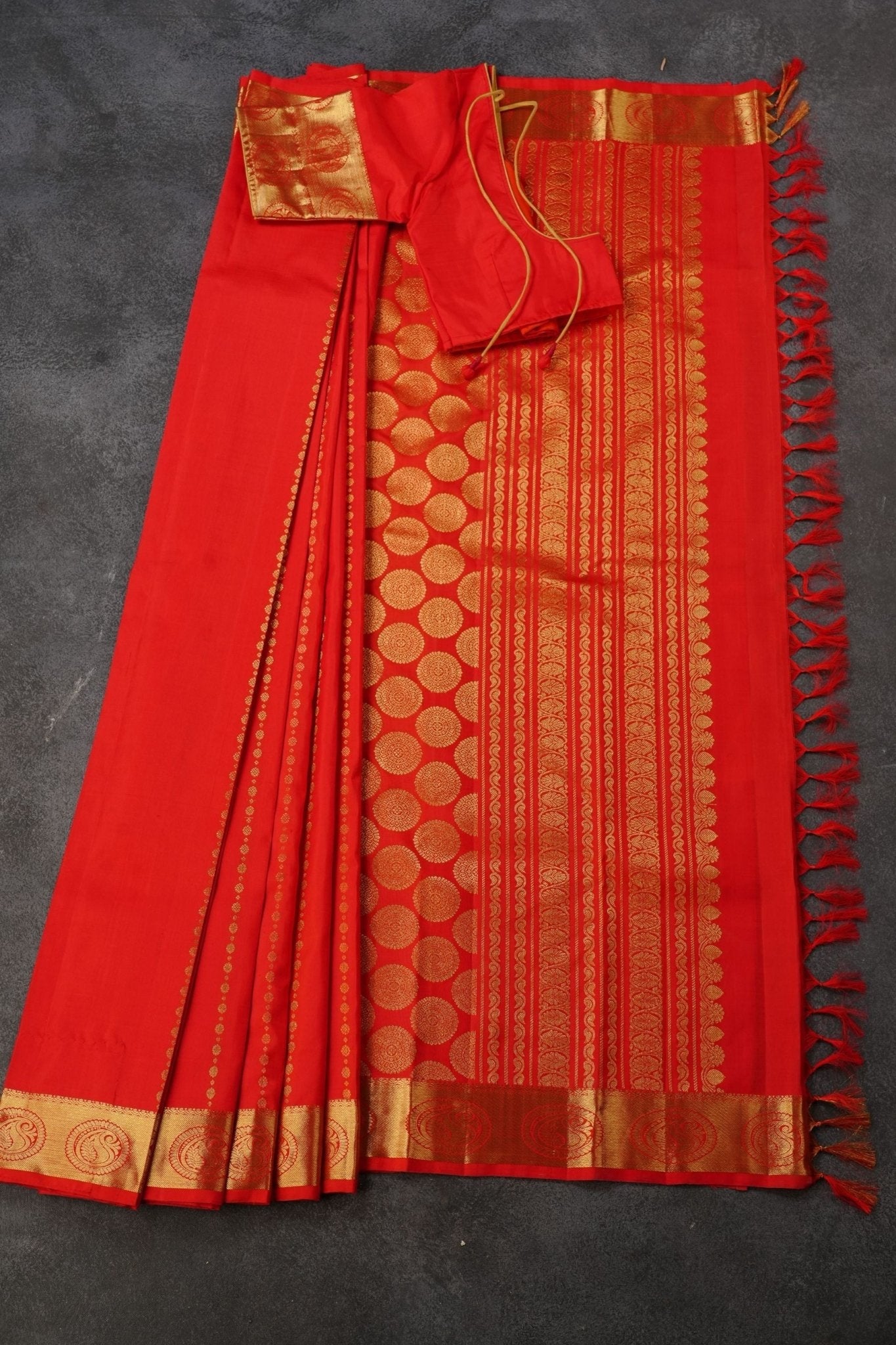
For the muhurtham — the core ceremony — heavy zari work on the body and a pallu with full coverage is expected, not decorative. Full gold zari weaving or copper zari motifs tell the room you understood what you dressed for. A saree with only a plain body and a border, even in pure silk, reads as casual.
Most Kanjivaram sarees fall into one of three weight categories: light (under 600g), medium (600–900g), and heavy (900g+). For a Tamil muhurtham, anything below medium weight tends to lack the visual presence the occasion calls for.
Evening functions (reception, thamboolam, sangeet) give you more latitude. A lighter Kanjivaram with a statement pallu, contrast border, and minimal body work is entirely appropriate, and easier to wear through a long day.
Shopping shortcut: Look specifically for "full gold weaving" or "copper zari" in the product description. The Pure Silk Sarees collection is filtered to ceremony-tier silk.

Color: What Reads Right at a Tamil Wedding
Color carries social information at these events. A few patterns hold across most Tamil communities in the diaspora:
- Red, crimson, and deep magenta sit close to the bridal palette. Unless you're immediate family, a different color is the smarter choice. Jewel tones work well: emerald, peacock blue, warm orange.
- Yellow connects to the muhurtham in many Tamil traditions through the turmeric association. This applies primarily to family; as a friend or community guest, yellow works fine for non-ceremony functions.
- Black has become more accepted at evening receptions in diaspora communities, but remains a deliberate choice for daytime ceremonies.
Orange and forest green Kanjivaram sarees are strong picks for guests. They photograph well, read as clearly festive, and don't clash with most bridal color schemes.
The Sarees above $200 collection covers ceremony-weight options across multiple color families. For a wider range with more budget-friendly picks, start with the Sarees For > $81 collection.

The Blouse and Jewelry: Don't Let Either Be an Afterthought
Kanjivaram sarees don't always ship with a blouse. When they do, blouse fabric quality matters as much as the saree itself. A heavy silk paired with a thin polyester blouse is a combination that registers.
For Tamil weddings, contrast blouses are traditional and expected at the higher-formality end of events. A forest green saree with a contrasting red blouse, or a blue saree with a gold blouse, signals that you know the aesthetic. This is distinct from simply wearing whatever came packaged together.
For a tight travel window, a pre-stitched blouse removes the fitting problem. Standard sizes ship immediately, which matters when the wedding is two weeks away.
The jewelry you pair with the saree matters too. Temple jewelry (gold-toned jhumkas, layered necklaces with red or green stones) is the traditional match for Kanjivaram silk. Overly contemporary pieces tend to fight the saree rather than complete it.
Budget Guidance for NRI Guests
The right spend reflects your relationship to the couple, not the venue.
- $150–$250: Solid range for friends, colleagues, and extended community. Kanjivaram-style silk with a decent border and a blouse included is available here. Body design density is lighter than higher tiers, which is appropriate for a guest outside the wedding party.
- $250–$400: Ceremony-weight Kanjivarams with full zari body work and Silkmark certification live in this range. Right for close family and anyone seated near the mandap during the muhurtham.
- $400+: For the inner circle: people with gifting responsibilities during the ceremony or a formal role in the events. At this tier, you're looking at heritage-weight silk with full body brocade.
Browse Designer Sarees for curated options across the $150–$400 range.

Buying from the US: The Practical Case
No customs hold, no unpredictable international shipping. JCS Fashions ships from California, with most orders arriving in 3–5 days. For weddings on a fixed date, that delivery window matters.
Indian weddings in the US often span multiple events: the engagement, mehendi, muhurtham, and reception each carry their own dress codes. If you're attending more than one event, the saree you choose for the main ceremony should be your most formal. Save lighter silk for the evening and secondary functions.
The full sarees collection shows live inventory only, so what you see is available to ship. To complete the look, the jewelry collection carries traditional gold-toned jhumkas and layered necklaces that pair cleanly with Kanjivaram silk.

Written by JCS Fashions